
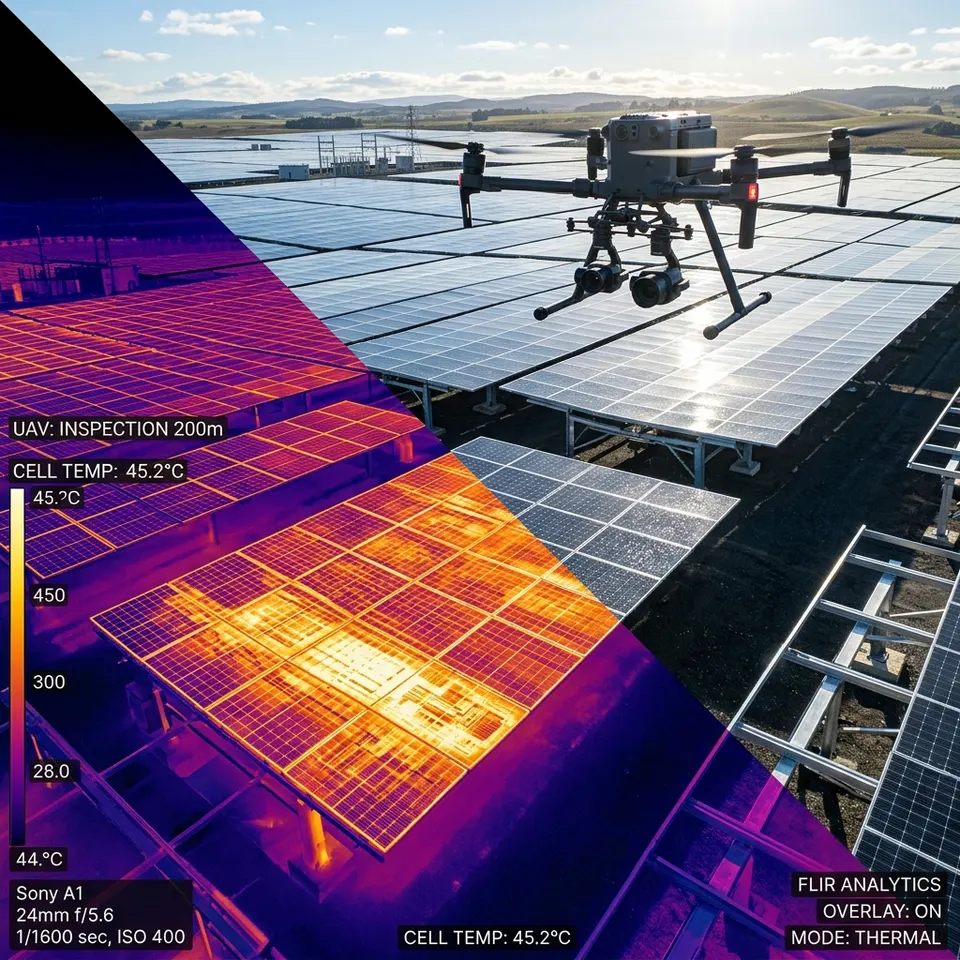
A solar PV thermal inspection report should present inspected areas, survey conditions, located findings and recommended checks together. Check the scope first, then the measurement context and evidence for the finding; support maintenance decisions with verification and follow-up records.
A good solar PV thermal inspection report clearly shows what was observed on which panel and the next inspection step. A file consisting only of thermal photographs may not be enough to prepare a maintenance plan. When reading a report, assess the inspection scope first, followed by measurement conditions, finding locations and recommended verification. This guide suggests a reading sequence for operations teams.
1. Distinguish the inspected area from the entire plant
The opening pages should clearly state the facility name, inspection date and which blocks or roofs were included. Do not assume total installed capacity and the area actually inspected are identical. Ask for any areas excluded because of flight or image-quality limitations to be identified separately.
We recommend checking the scope against the current site plan. Does “Block B inspected” match the operator's definition of Block B? Are newly added panel rows shown on the plan? Clarifying at delivery whether omitted areas will be inspected again reduces uncertainty at later maintenance meetings.
2. Read survey conditions before the findings
Irradiance, wind, system operating status and the measurement approach are important when interpreting results. The published scope of IEC TS 62446-3:2017covers topics including measurement equipment, ambient conditions, inspection methods and reporting. This checklist does not replace the full standard or a certificate of conformity.
Explaining how the method was applied on the day is as valuable as naming the method in the report. An area that could not be interpreted because of conditions should be described separately from an area in which no anomaly was observed. Different survey times and operating states should also be considered when comparing with earlier reports.
3. Locate every finding on site
A report is harder to use if the maintenance team cannot locate the photographed panel on site. We recommend requesting a findings record containing the fields below. These are suggestions that facilitate operational follow-up; the same delivery format is not mandatory for every project.
- Finding ID: A record number that can remain unchanged in subsequent correspondence.
- Location: Block, row, panel or its reference on the existing site plan.
- Evidence: The relevant thermal image and, where possible, a matched visible-light photograph.
- Observation: A brief, clear description of what was observed.
- Interpretation: Possible causes and the checks needed to distinguish between them.
- Follow-up: Fields for the responsible team, check result and closure date.
4. Interpret temperature differences in context
Delta T, or ΔT, is the difference between two temperatures. As an educational example, if the selected reference area is 45 °C and the inspected area is 60 °C, the difference is 15 °C. These numbers are not a site result or an intervention threshold. The key questions are where the 45 °C reference came from and whether the areas are comparable.
Absolute temperature measurements are also affected by camera settings. Parameters such as emissivity, the surface's ability to emit radiation, and reflected temperature influence the measurement. FLIR's temperature measurement documentation explains these parameters. Do not therefore decide automatically to replace a component based on a colour or a single number in the report.
5. Distinguish observed anomalies from definitive diagnoses
“Localised heating was observed in a cell area” is a measurement-based finding. “The panel is faulty for this reason” is a stronger diagnostic claim. If the second statement is used, its supporting evidence should be clear. Do not record possible causes as definitive conclusions before completing the report's recommended visual inspection or electrical verification.
If priority classes are used, read what each class means. Which findings and assessment approach led to “high priority”? Is the recommended action an additional measurement, inclusion in a maintenance plan or assessment by a competent site team? An actionable next step is needed as well as a label.
6. Turn the report into traceable maintenance work
For practical follow-up, assign a responsible person to each finding, record the planned inspection date and attach the intervention documentation to the same record. Outcomes can be recorded with clear statuses such as “awaiting inspection”, “verified”, “action taken” or “follow-up required”. These statuses are a suggested workflow and can be adapted to your existing maintenance software.
When closing a record, specify what was checked and the evidence supporting closure rather than simply writing “action completed”. NREL's photovoltaic operations and maintenance guide also provides a broad framework for planned, transparent maintenance. A thermal report is one input into this wider maintenance process.
Final questions when receiving a report
- Are uninspected areas or areas requiring another check clearly identified?
- Can findings be located on site without additional explanation?
- Are measurements and interpretations clearly distinguished?
- Can the recommended checks be assigned to a responsible person?
- How will raw data, report versions and earlier records be stored?
Do not expect an exact kWh loss or revenue calculation from a thermal report alone; such an assessment requires additional production and performance data. Our solar PV maintenance and thermal reporting service describes the deliverables; sharing your facility details will help clarify the level of reporting you need.