
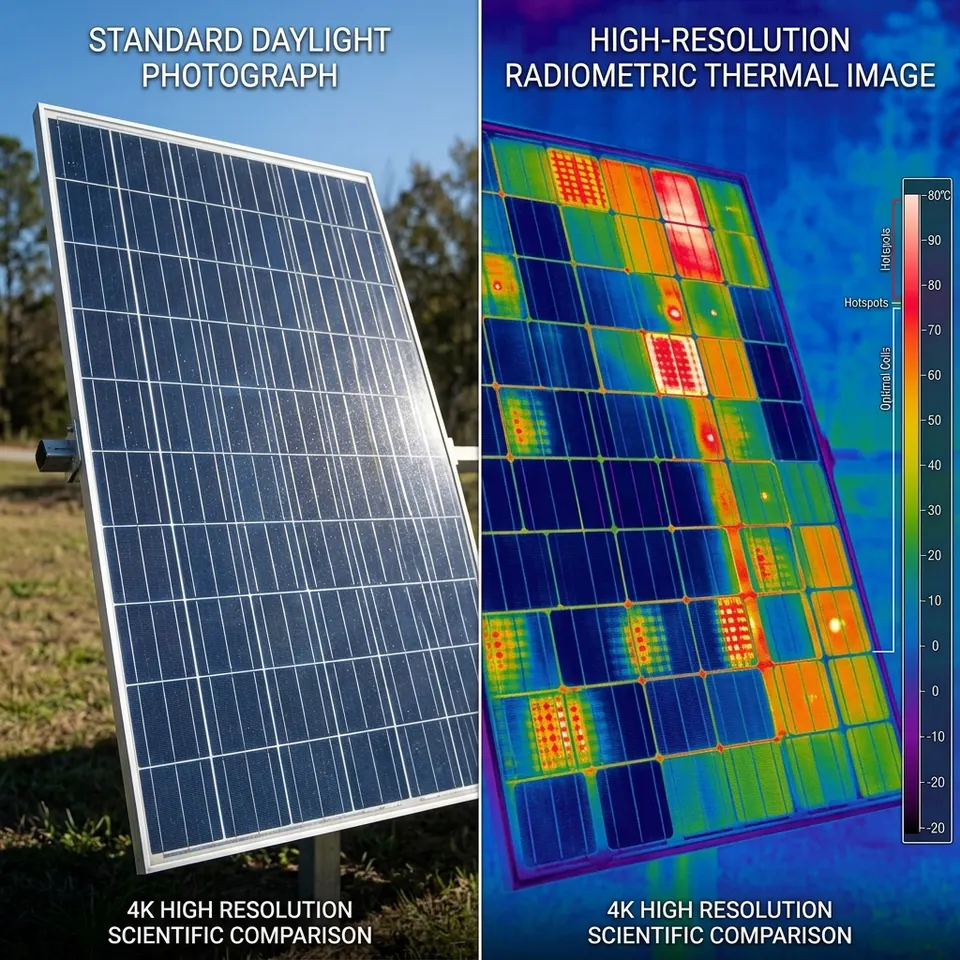
A thermal camera detects infrared radiation to create images for assessing surface temperature distributions. At solar power plants it helps locate abnormal heating, but does not identify every fault's cause or production loss on its own.
A thermal camera is a device that detects infrared radiation and creates images for assessing temperature distributions. It is used at solar power plants to examine thermal differences between cells, panels or strings operating under similar conditions. A thermal image may show where further checks are needed; its colour alone does not identify the fault or the amount of electricity lost.
How does a thermal camera work?
While an ordinary camera records visible light, a thermal camera uses a detector sensitive to infrared energy. The detected energy is shown on screen in greyscale or a colour palette. These colours are not the panel's actual colours; they make the data easier to distinguish visually. The basic mechanism is described in FLIR's explanation of how thermal cameras work in further detail.
A thermal camera's ability to produce images in darkness does not mean operational solar panel inspections can be carried out in the same way at night. The camera is a tool; the inspection's meaning depends on the panel's operating state and the measurement's purpose. Service scope matters as much as the equipment used.
Why is a radiometric image important?
Not every thermal camera has the same measurement capabilities. Radiometric systems provide temperature data with suitable settings and conditions. A colour screenshot alone may not retain all the properties of the original measurement data. Accuracy is related to factors including target surface properties, distance, atmosphere and energy reflected from the surroundings. This distinction is explained in FLIR's radiometry and imaging guide in more detail.
When commissioning a service, clarify what “thermal image delivery” means: which files will be provided, will measurement points appear in the report, and can the raw images be re-examined later? Agreeing the archiving format at the outset enables more consistent records across inspections on different dates.
Is every panel that looks red faulty?
No. A colour represents a value within the selected palette and temperature range. Changing the scale can change how the same image looks. It is therefore incorrect to compare redness directly across two different photographs. Check the image scale first, then the measurement area and the reference panel.
As a practical reading sequence, we recommend three questions: What is being used as a comparison on the same site? Are the compared areas operating under similar conditions? Is there a visible-light photograph and explanation alongside the thermal image? Without those answers, deciding that “the reddest panel must be replaced first” goes beyond the information the report provides.
Reflections and weather conditions in solar panel measurements
In common front-facing long-wave thermal inspections, the camera assesses the temperature distribution on the panel glass surface; it does not directly see through the glass as a normal photograph might suggest. Reflections of the surroundings in the glass, shading or an unsuitable camera angle can create misleading patterns. Solar irradiance and wind also affect the thermal differences observed. FLIR's technical note on solar panel thermographyexplains the importance of visual and electrical checks in this context.
A suitable flight date alone is not enough. When receiving the report, check that survey conditions were recorded and areas unsuitable for inspection were identified. If sections need to be imaged again, do not treat them as equivalent to a “no issues found” result.
What does drone thermal surveying provide?
A drone is a platform for collecting images over large panel areas. A useful inspection requires image quality checks, matching to the site plan and interpretation after the flight. An attractive aerial overview does not always provide sufficient detail for cell-level decisions. The inspection objective should be clear when preparing the quotation.
- Is a general site survey or a detailed inspection of a particular panel group required?
- Will finding locations be matched to panel numbers or the layout plan?
- Will visible-light images be delivered alongside thermal findings?
- Will the recommended verification step for suspected findings be explained?
- How will repeat surveying after unsuitable conditions be managed?
What can a thermal camera not tell you on its own?
Observing a hotspot does not mean the same component is faulty in every case. Conclusions concerning microcracks, connection issues or production losses may require additional data. Read the thermal inspection as a source of findings supporting maintenance decisions; the definitive cause should be considered together with verification.
For example, when a module is flagged, the operator's first step is to match the report location to its own inventory. It can then plan the recommended site check and add the result to the same record. A single photograph thus becomes part of a traceable maintenance file. For more on this topic, see the guide to reading thermal inspection reports and our solar panel fault detection service for further details.