
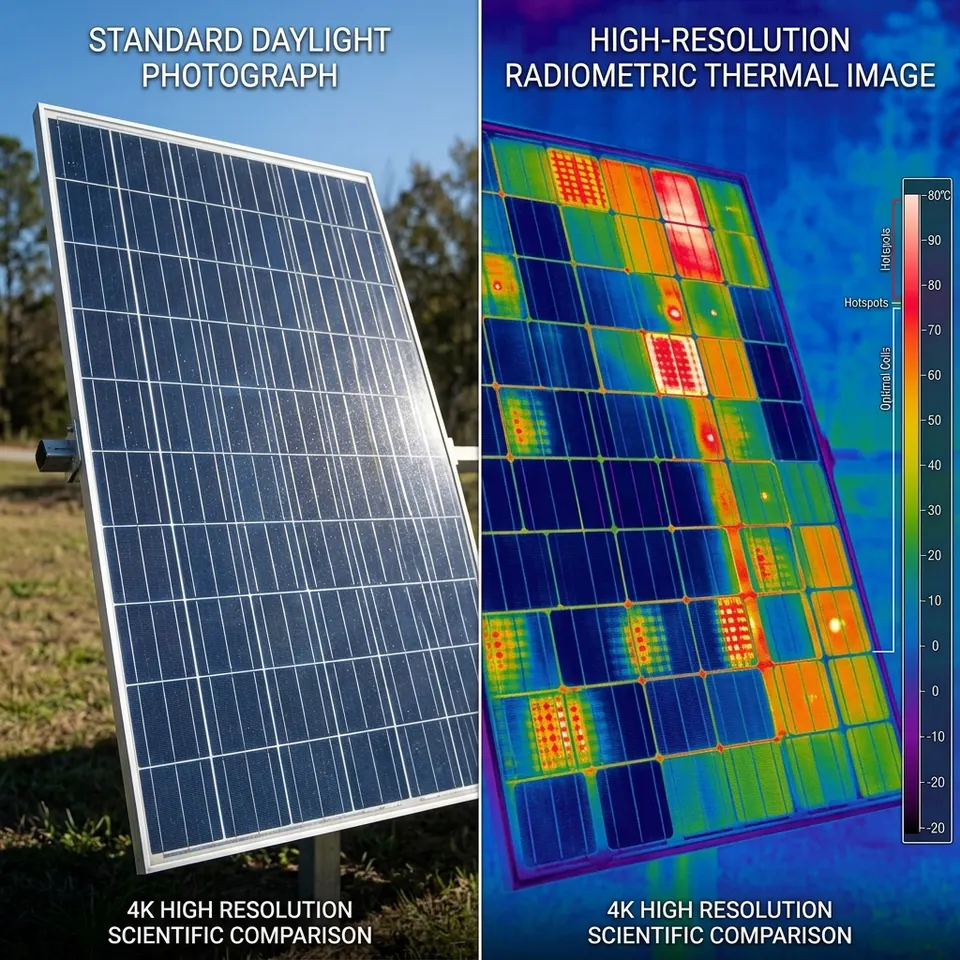
How are solar panel hotspots and string anomalies assessed in thermal images? A guide to verifying findings and prioritising maintenance.
Hotspots: the finding first, then the cause
A hotspot occurs when one area of a panel heats more than its surroundings. Finding a hotspot identifies a location requiring inspection; it does not always explain the cause on its own. Shading, soiling and electrical issues should be included in the assessment.
What does radiometric data provide?
A radiometric image contains measurement data for temperature assessment. Retaining this data rather than just a colour screenshot helps with later examination of the finding. A temperature value should not be interpreted without context because surface properties, reflections and survey conditions affect the result.
Assessing string anomalies
A differing temperature pattern along a string should be matched to the site's connection plan and inverter information. Thermal surveying narrows the inspection area; electrical checks help investigate the exact cause. Possible diode faults, connection problems or system operating conditions should be considered separately.
Limitations concerning microcracks and PID
A thermal camera does not directly reveal every microcrack. A thermal effect caused by a crack may be visible, but other measurements may be required. Similarly, a definitive PID diagnosis should not rely on a thermal image alone.
Information to provide to the maintenance team
- The finding's location and a comparison image
- Survey conditions and system operating status
- The observed pattern and possible causes
- Verification and follow-up recommendations
Our solar panel fault detection service explains the scope and helps clarify the checks your site needs.