
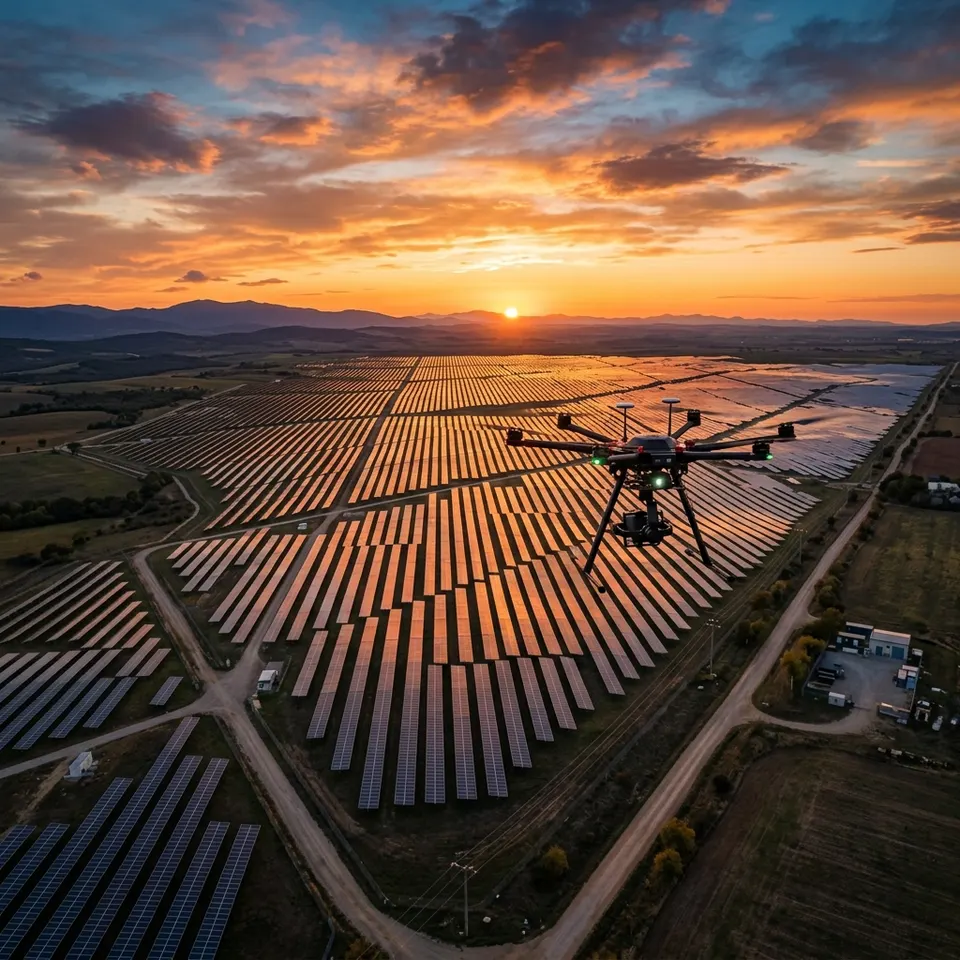
GES is the Turkish abbreviation for a solar power plant. Photovoltaic plants convert sunlight into electricity. Thermal inspection supports maintenance and fault investigation by identifying unusual temperature distributions in operating panels.
GES is the Turkish abbreviation for a solar power plant. A photovoltaic solar power plant converts sunlight into electricity through panels. Efficient operation does not depend solely on panel numbers; connections, inverters, environmental conditions and maintenance are considered together. Thermal inspection is one method that helps find unusual temperature distributions in operating panels.
How does a solar power plant work?
Photovoltaic cells convert incident light into electrical energy. Cells are combined to form modules, commonly called solar panels. Electrical connections between panels create a larger generation system. A finding in a single cell and the production behaviour of the entire plant are therefore not interpreted at the same scale. For the fundamental operating principle, see the US Department of Energy's explanation of photovoltaic technology may be consulted.
In this guide, GES refers to plants using photovoltaic panels. The thermal inspection discussed here is not a type of system that generates heat from the sun; it is a method of assessing surface temperatures at an existing electricity-generating facility. Clarifying this distinction when requesting a service helps select the right equipment and inspection scope.
What are the components of a solar power plant?
- Solar panels: The modules where electricity is generated.
- Inverter: Converts the direct current produced by the panels into the alternating current used by the grid and most electrical devices.
- Mounting structure: Allows panels to be installed appropriately on roofs or on the ground.
- Cables and protective equipment: Provide electrical connection, isolation and protection functions according to the project.
- Monitoring system: Helps track production and fault records, depending on the installed equipment.
A battery is not mandatory in every solar power plant; it is added according to storage needs and system design. To understand the components' roles, the DOE's photovoltaic system design guide is a useful basic reference.
What is the difference between kW, MW and kWh?
kW and MW are units of power; 1 MW equals 1,000 kW. kWh describes the amount of energy generated or consumed over a period. In a simplified example, a system producing an average of 100 kW for one hour generates 100 kWh of energy. Installed capacity alone does not specify daily production.
When comparing production, the period, weather and operating conditions must be considered together. A difference between yesterday and today is not direct evidence of a fault. The roles of temperature, soiling and shading in site performance are discussed in the DOE's explanation of energy production in more detail.
Why are rooftop and ground-mounted PV inspections planned differently?
At a rooftop plant, chimneys, ventilation units, different roof levels and facility activities may affect inspection planning. At a ground-mounted plant, site boundaries, slope and widely separated panel blocks become important. The same installed capacity does not imply the same flight duration or access requirements.
For example, for a facility spread across different buildings, we recommend keeping separate layout information for each roof. At a plant on a single site, matching blocks, rows and inverters helps maintenance teams locate findings. Preparing an inspection request with this layout information, rather than total capacity alone, is more useful.
Where does thermal inspection fit into maintenance?
Thermal imaging can flag panel or string areas requiring checks. Visible-light images, operating records and electrical measurements where necessary should then be assessed together. IEC TS 62446-3:2017addresses outdoor thermography of operating photovoltaic systems. Merely including the standard's name in a quotation does not demonstrate that the company is certified.
An operator's preparation checklist before inspection
- Share the current site plan and panel numbering system.
- State installed capacity separately from the roofs or blocks included in the inspection.
- Prepare the dates of production drops and any inverter warnings.
- Gather previous cleaning, maintenance and replacement records.
- Define your expected outputs: a findings map, a detailed panel list or a follow-up inspection.
- Create a record structure that allows every delivered finding to be assigned to a responsible person within the operation.
This preparation turns the question “is there a problem at the plant?” into a more specific inspection plan. Keeping findings, verification, intervention and inspection dates together rather than retaining only a one-off report makes it easier to identify new issues at the next inspection. Track the action taken and its outcome instead of expecting a fixed production increase.
For your site, explore the scope of solar PV thermal analysis and the rooftop PV drone inspection process for details. To learn the basics of measurement, our thermal camera guide is a useful starting point.