
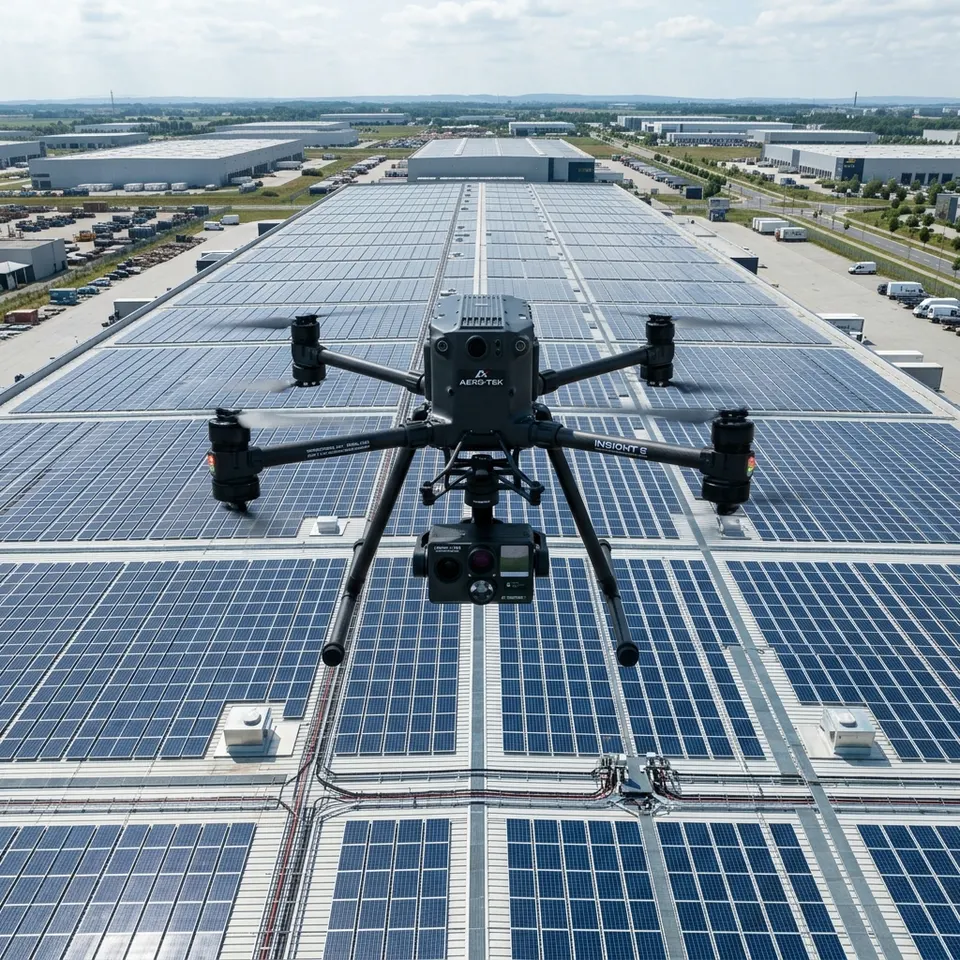
How is a drone flight planned for industrial rooftop PV inspections? A preparation guide to access, shading, site coordination and reporting.
An inspection that reduces the need for roof access
Collecting images with a drone may reduce the need for personnel to walk between panel rows across large roofs. However, this method does not eliminate every risk. Flight planning, an assessment of the surroundings and coordination with the facility are necessary. Electrical checks and repairs may still require access.
Why does roof geometry matter?
Slope, different roof levels, chimneys and ventilation equipment may cause shading or reflections. An up-to-date layout plan helps match panel rows correctly in thermal images. Operations at a facility spread across separate buildings are not planned in the same way as those on a single roof.
Operator preparation before the survey
- Share the facility location, number of roofs and installed capacity.
- Identify the appropriate site contact and access conditions.
- Provide information about critical production areas and operating hours.
- Share known faults, shaded areas and previous reports.
Weather and operating conditions
Passing clouds, wind and reflections affect the interpretation of measurements. The survey day and time should depend on the site's suitability for measurement, not the calendar alone. Unsuitable conditions may require rescheduling.
Results that support maintenance
The report should include anomaly locations and recommended checks. Separating shading observations from suspected electrical faults helps the operator decide on the next step. If a follow-up inspection is planned, previous measurement conditions should be retained.
Explore our rooftop PV drone inspection service and request a quote for your site.