
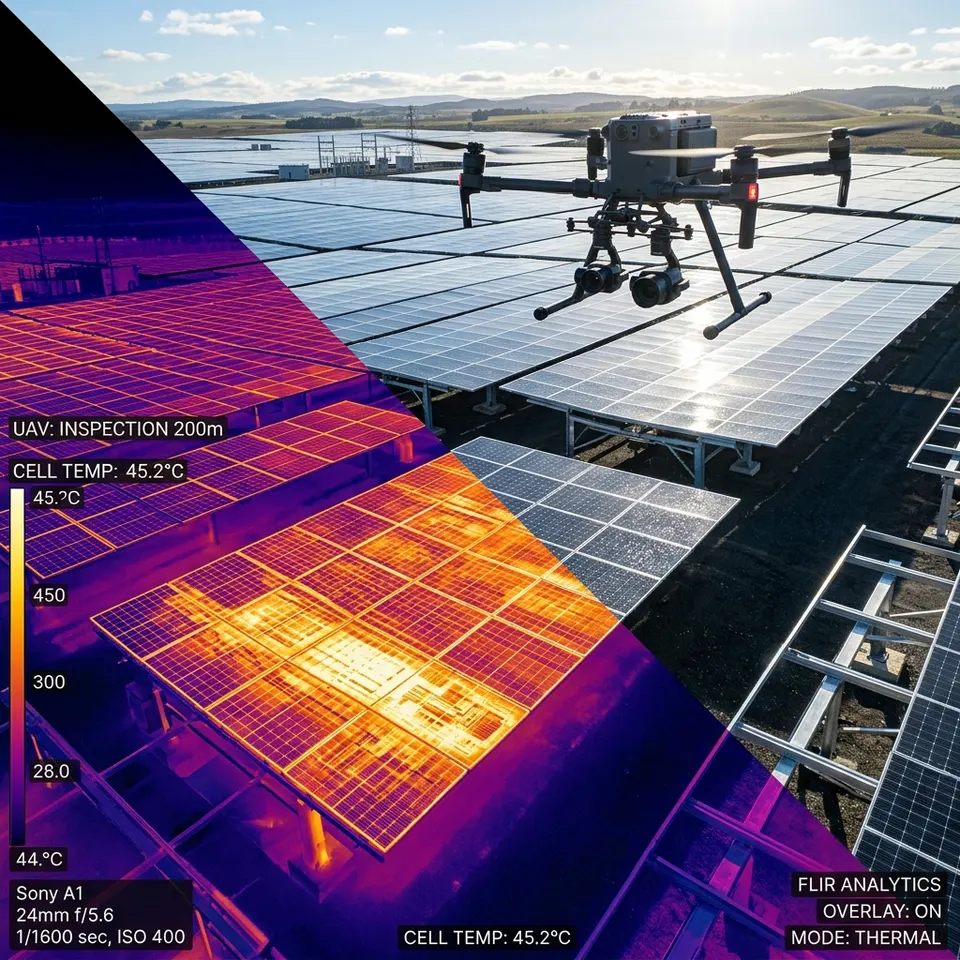
The purpose, suitable survey conditions and limitations of solar panel thermographic inspections. A guide to turning thermal findings into maintenance decisions.
What does thermography measure?
Thermography enables temperature distributions to be assessed by imaging infrared radiation from surfaces. For solar panels, it is used to locate cells, panels or string areas behaving differently under comparable conditions. A thermal image does not perform all the functions of an electrical performance test.
Why are operating conditions recorded?
Irradiance, wind, passing clouds and system operating status affect the image. Shading or reflections may create patterns resembling actual faults. Retaining survey conditions and site information helps findings be interpreted correctly and compared later.
How does early detection support maintenance planning?
Thermal surveying can narrow the maintenance team's search area by identifying locations requiring checks. Verifying findings and taking appropriate action may help reduce potential production losses. The inspection itself does not repair the fault or guarantee a particular efficiency increase.
A one-off survey or periodic checks?
The first inspection establishes a baseline record. Subsequent checks help track new anomalies or ongoing issues. Inspection frequency depends on facility conditions and the maintenance plan. Differences in measurement conditions must be considered when interpreting earlier and later results.
How can you choose the service scope?
Define thermal surveying, detailed reporting and complementary electrical testing needs at the outset. Ask which data is required, particularly if you expect a root-cause assessment or an exact production-loss calculation. Our solar PV thermal analysis service and our maintenance reporting approach for further details.